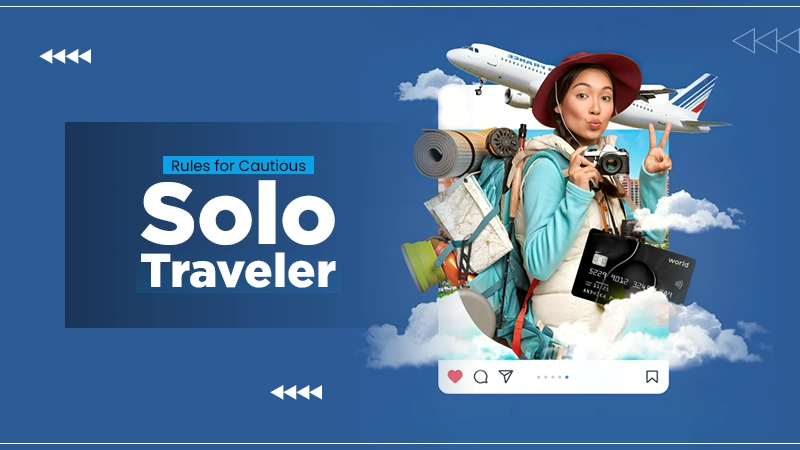
Solo Road Trip Route Planning Advice for Women
|
Published: March 12, 2026

A solo road trip as a woman is more than just a drive. Think of it as a powerful act of independence, self-trust, and discovery. With your own wheels and your own schedule, you choose the soundtrack, the pace, and the places that speak to you. Not surprisingly, the trend is surging across the US, with women actively embarking on these adventures.
According to Consumer Affairs, the number of licensed female drivers in the US exceeds that of licensed male drivers. Surprisingly, men have a bigger share in fatal traffic accidents caused by speeding and impaired driving. Women have an upper hand when it comes to driving safety, making solo road travel feasible for them.
However, before joining the solo road trip bandwagon, there are certain things to consider as a woman. Freedom feels best when it’s backed by solid planning, cultural awareness, and clear safety habits. The goal isn’t to overthink every mile, but to create a flexible framework that keeps you confident and prepared on the road.
In this article, we will share a few route planning tips to make your solo road trip a rewarding experience.
CN Traveler shares a list of the best destinations for women to explore solo in the US. Austin, Texas, is loved for its friendly people and musical vibe. Boston, Massachusetts, Carlsbad, California, Jackson Hole, Wyoming, and Key West, Florida are some other names featured on the list. The equation may change when you plan to drive rather than fly to these cities.
Start by shortlisting destinations that match your interests. Do you love mountains, coastlines, heritage towns, wildlife parks, or food-centric cities? How far can you drive comfortably? Are the highways and routes safe and accessible? Read blogs, guidebooks, and recent reviews to understand road conditions, seasonal weather, and any local advisories along the route.
Look up basic cultural norms and sensitivities for each region you’ll pass through. Check dress codes, attitudes towards solo women, and common scams in detail. Pay attention to feedback from other solo female travelers. You can rely on it to understand what feels safe, what to avoid after dark, and which areas are more conservative.
Technology has made road travel much easier in the last few decades. You can use digital maps to plan your broad route. However, don’t neglect offline maps so that you have a backup plan if the network drops in remote areas. Apps like route planners, accommodation platforms, and fuel finders can help you cluster stops, compare stay options, and track distances.
Another aspect of using technology wisely is keeping key details backed up. Take screenshots of bookings, store emergency contacts, and save local taxi numbers or hospital contacts offline. Navigation voice guidance can help you keep your eyes on the road. You can set your next stop before you start driving rather than fiddling with your phone mid‑journey.
Staying mindful of privacy is equally important when using tech for route planning. Avoid posting your real‑time location publicly and delay social media updates to prevent tracking of your exact movements. Share your live location only with a trusted circle rather than with anyone you casually meet along the way.
Safety should be the top priority when it comes to route planning for a solo trip, regardless of your gender. Let us consider the example of a 12-car pile-up in Colorado Springs in October, 2025. According to a KKTV report, the Colorado Springs Police Department (CSPD) stated that luckily, there were no injuries or casualties in the accident.
A car accident lawyer in Colorado Springs would have come into the picture if there were injuries and damage. Legal support kicks in if there is a negligence angle in any accident, and victims suffer due to a reckless, drunk, or distracted driver.
According to Springs Law Group, personal injury law comes to the rescue of such victims and empowers them to claim compensation. For a solo woman planning a road trip, avoiding high-risk routes with bad weather and poor road conditions makes sense. Moreover, you should drive mostly in daylight and set a hard cut‑off time in the evening to be off the road.
When planning your road trip route, think beyond highways and destinations. You must also keep breaks in mind. Long stretches behind the wheel can cause fatigue, which is one of the biggest safety risks on a road trip. As a rule of thumb, you must stop every 2–3 hours to stretch, hydrate, use the restroom, and reset your focus.
A Thrillist article highlights that the best road trip is not a single long one, but an extended trip split into two. In fact, you may consider doing it even for a medium-length drive. Stopping overnight in the middle of the journey can make driving easier. Once again, safety should be on top of your mind, even when choosing a break location.
Choose well‑lit, busy rest stops, fuel stations, or popular cafés for breaks rather than isolated pull‑outs. Use these pauses to quickly check your route and estimate your arrival time. Messaging a check‑in to someone you trust is a good idea. If you feel drowsy even between planned stops, pull over somewhere safe sooner rather than pushing through.
Solo road trips can help women build confidence, decision‑making skills, and self‑trust. Navigating logistics, challenges, and joys entirely on your own terms is empowering. Moreover, you get uninterrupted time for reflection, creativity, and healing, away from everyday roles and expectations.
Ideally, you must consider stopping roughly every 2–3 hours for a short break during long driving days. These pauses reduce fatigue, improve concentration, and lower your risk of microsleeps or slow reaction times. Listen to your own signals, too. If your eyes feel heavy, your focus drifts, or your back aches, stop even if it’s earlier than planned.
Sharing your itinerary with at least one trusted person creates an extra layer of safety and accountability during a solo trip. When someone knows your planned route, overnight stops, and approximate timelines, they can quickly notice if you’ve gone unusually quiet or off‑schedule.
A well‑planned solo road trip lets you claim the driver’s seat in every sense. You have control over your route, your safety, and your growth. However, you should be accountable for your safety, and it starts by planning your route wisely. While spontaneity is fun, it may not be the safest approach when traveling alone on an unknown highway. With these pieces in place, the open road becomes a powerful space for joy and self‑discovery.

Welcome to Tripvert, your best travel companion. Here, you will find real travel stories, tips, and guides that will help you explore the world with a different approach.