How to Personalize Your Travel Outfits Creatively
|
Published: April 7, 2026
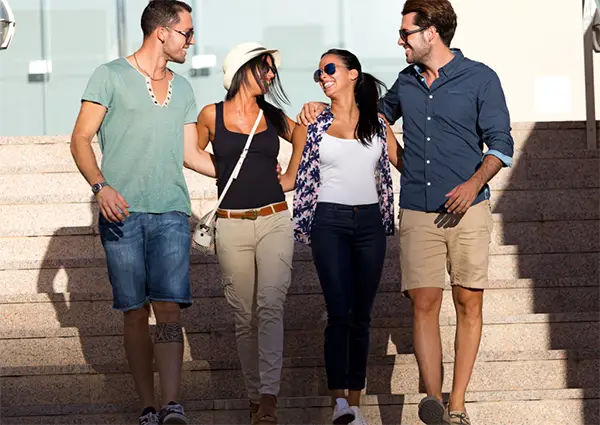
Travel clothing needs to strike a balance between comfort, durability, and adaptability. Conversely, personalisation adds another level of identity expression without compromising usability.
Choosing materials, layering schemes, and modular design components that function in a variety of activities and climates is necessary for effective customisation.
Instead of interfering with mobility or packing effectiveness, personalisation should improve usability.
Read further to explore more!
Key Takeaways
- Understanding how the base layer forms the foundation of travel outfits and how they play a role in regulating temperature, managing moisture and providing comfort as well.
- Optimizing the colour combinations in outfits to make the best use of colour and contrast at the same time.
- Analyzing the factors to consider before packing your clothes and including a customized bag as an extended outfit.
- Balancing aesthetics with durability to enhance the outfit and make it convenient as well.
The foundation of any travel outfit is the base layer. These garments must be comfortable to wear for extended periods of time, control moisture, and regulate temperature.
Because they are odour-resistant and breathable, technical fabrics like merino wool or synthetic blends are favoured.
Neutral tones are often used as a base because they make it easier to incorporate customised elements.
A stable base layer ensures that personalization can be added without affecting performance.
Layering allows travelers to modify both function and appearance without carrying excessive clothing. Mid-layers and outer layers can be swapped to create different looks using the same base.
Hoodies, overshirts, and lightweight jackets offer customisable surfaces without sacrificing flexibility. Additionally, layering makes it possible to adjust to shifting weather.
This approach supports:
Layering creates a modular system for personalization.
Customisation based on fabric adds visual identity without changing the structure of the garment. Additions need to be sturdy, lightweight, and firmly fastened.
One effective method is using iron on patches for clothes.
By applying these patches to jackets, backpacks, or denim surfaces, travellers can add different elements such as:
It’s crucial to place things correctly. Sleeves, chest panels, and bag surfaces are examples of areas that offer visibility without impeding mobility.
Fabric additions allow customization while preserving garment integrity.
The choice of colour has a big impact on personalisation. Even when combined across several ensembles, coordinated colour schemes guarantee that various elements complement one another.
Customised components or accessories can be used to add contrast. For instance, a balanced look is produced by wearing neutral apparel with striking accents.
Technical considerations include the following:
Color control enhances both aesthetics and usability.
Accessories provide a flexible way to personalize outfits without modifying core garments. Items such as hats, belts, and bags can be changed frequently without affecting packing constraints.
Accessories that are functional should have two uses. For instance, a hat can enhance overall style and offer sun protection.
Accessory-based personalization allows quick adjustments without permanent changes.
Travel bags are part of the overall visual system. Backpacks, duffel bags, and carry-ons can be customized to match or complement clothing.
Patches, tags, or fabric elements make bags more recognisable and unique. This is particularly useful in crowded travel environments where timely identification is essential.
Bag customization integrates style with practical benefits.
Long walks, a variety of terrain, and shifting conditions must all be supported by footwear. These requirements shouldn’t be compromised by personalisation.
Neutral footwear with subtle design elements allows for compatibility with a range of ensembles.
Variation can be added with custom laces or small adjustments without compromising performance.
Footwear choices should prioritize:
Fashion and utility are complemented by adaptable shoes.
Travel requires efficient packing. Personalization strategies must not increase bulk or weight unnecessarily.
Modular systems, such as interchangeable layers and accessories, enable multiple outfit combinations from a limited number of items.
Efficiency can be maintained by:
Mobility is not diminished by personalisation thanks to effective packing.
Customisation needs to be in line with cultural and environmental norms. Clothing should continue to be appropriate for the local climate and customs.
For instance, layered systems are needed in colder climates and lightweight fabrics are necessary in warmer climates.
Cultural considerations may also influence acceptable styles and modifications.
Practicality and consideration for regional circumstances are ensured by tailoring personalisation to the situation.
Travel conditions, such as frequent movement, washing, and exposure to the environment, must be tolerated by customised components.
Personalisation materials should be durable and firmly affixed. Improperly implemented changes can deteriorate rapidly and impact the overall look.
Durability ensures that personalized features remain intact throughout the trip.
A methodical approach that incorporates functionality, modular design, and visual identity is necessary for customising travel attire.
By using layering systems, fabric additions, and coordinated accessories, travelers can create distinctive looks without compromising performance.
Effective packing and long-lasting customisation techniques guarantee that customisation is feasible in a variety of settings.
Combining comfort and style is a key component of personalising your travel attire. This entails enhancing your ensemble with colour contrasts, significant accessories, adaptable pieces, and more.
The right outfit plays a major role in boosting confidence, providing warmth and ease, along with a stylish expression.
This is what makes style an important idea when travelling.
One of the most important parts of building a travel outfit is colours. Neutral colours form the best travel outfits. This is because they go well with everything.
You can make your outfit more interesting by adding a third layer, such as a jacket, vest, or sweater.
A travelling dress is a woman’s plain and easy dress that she wears while she is travelling.
You can improve an outfit by adding a simple statement piece, such as a hat or scarf, to add a pop to the neutral look.

Welcome to Tripvert, your best travel companion. Here, you will find real travel stories, tips, and guides that will help you explore the world with a different approach.