Essential Travel Gear for Your Next Adventure
|
Published: April 7, 2026
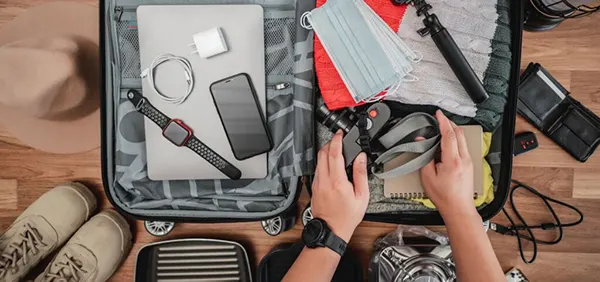
“He who would travel happily must travel light.”
— Antoine de Saint-Exupéry (Aviator & Author)
Besides being lighter, your gear also needs to be durable as the treatment during travel is usually rough. Also, just include the essentials; essential for your functionality there.
Poor choices can lead to fatigue and reduced mobility while travelling.
Effective travel gear prioritizes movement, security, and adaptability. You need to evaluate each piece of equipment based on your capacity, the travel path, and destination conditions.
KEY TAKEAWAYS
- Take only essential things with you so its light enough that doesn’t slow or tire you down.
- Pack things in functional categories in your backpack.
- Choose clothing and footwear according to the environmental conditions of the way and destination.
- Compact first aid kit and portable power banks also comprise travel essentials.
You don’t need me to tell that you’ll need a backpack on your travels. But I can surely advise a thing or two about what kind of backpack you must use:
High-quality options such as Condor backpacks are designed with reinforced stitching, modular compartments, and load-bearing support systems. These features reduce strain on the shoulders and back during extended use.
They usually come with:
A well-designed backpack improves mobility and reduces fatigue.
Disorganized packing can take up your considerable time while accessing items. So, always use solutions that segment your things into functional categories like packing cubes, compression bags, and modular organizers.
Compression systems reduce volume, allowing more efficient use of space. This is particularly important for extended trips or carry-on restrictions.
Structured packing supports:
Organization minimizes disruption during travel.
Plan however much but you can never be sure about what will be the weather conditions once you reach the destination. So, take adaptable clothing with you.
A layered clothing system can flexibly adjust insulation andl protection based on temperature and weather conditions.
Base layers manage moisture, mid-layers provide insulation, and outer layers protect against wind and rain. The following infographic explains this better:
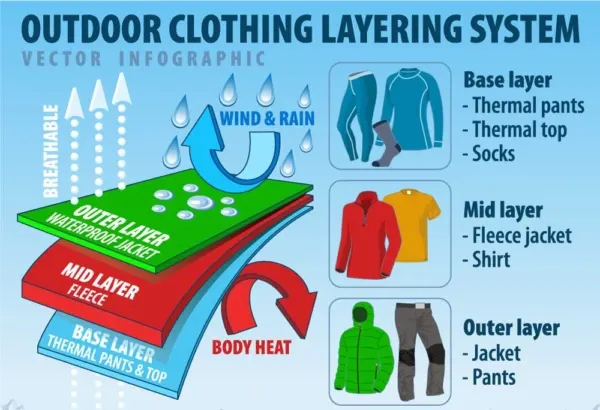
Material selection affects breathability and drying time. Technical clothing systems improve comfort and reduce the need for excessive packing.
Your mobility majorly depends on your footwear. A bad pair can tire you down, and even cause injury.
Travel footwear should provide:
Selecting the right footwear ensures consistent performance across different environments.
Let’s be real. You can’t function without your phone even in the remotest corner of the world. But how do you charge it without any power source around? That’s why you need portable power bank so that your essential devices remain operational.
The collective capacity of your phone and the chosen power bank should last you all through the travel duration with usual device usage. Fast-charging capabilities reduce downtime.
Power management systems support:
Reliable power is critical for modern travel.
Going into the unknown territory can raise some security concerns. Hence, protective measures are necessary for your things and information.
Anti-theft features include lockable zippers, RFID-blocking compartments, and concealed pockets. These reduce the risk of theft or unauthorized access.
Stay sufficiently aware of surroundings and try not to expose valuable items.
Effective security reduces risk and protects essential belongings.
Navigation is essential to maneuver around unknown territory. But your phone most likely would suffer from network problems there.
So, either download offline maps or take some backup GPS device along.
Communication tools must remain accessible at all times. This includes maintaining charged devices and access to local networks.
Reliable navigation and communication prevent delays and improve safety.
People tend to undermine hydration and nutrition during travels. In a mountaineering study, 55%-57% participants were found to be dehydrated.
This is quite a serious as it can directly affect your experience in short-term and even lead to long-term health issues.
A reusable water bottle can take care of your hydration. It should be lightweight and easy to refill.
On the other hand, compact food storage system support your nutrition. Look for one with insulated containers that maintain the temperature of stored food.
Proper hydration and nutrition support sustained activity and reduce fatigue.
On an adventure, you’re more prone to injuries and health complications. Might as well be prepared for some unexpected minor medical emergencies.
Compact first aid kits should include essential items such as bandages, antiseptics, and medications. Emergency tools may include multi-tools, flashlights, and emergency blankets. These items become necessary as proper assistance is usually unavailable in places being discussed.
Preparedness reduces risk and improves response capability.
You should be prepared for any change in weather or other travel contexts. Your gear must be adaptable to different environments and situations.
Modular systems allow shedding things or taking more as per the situation. This includes detachable compartments, adjustable straps, and interchangeable accessories.
Adaptability ensures that the gear remains functional across varying scenarios.
Excess weight can quickly slow and tire you down. Efficient packing and gear selection focus on minimizing weight without sacrificing functionality.
Lightweight materials and multi-purpose items reduce the overall load. Each item should serve a defined purpose within the travel system.
Weight optimization improves endurance and overall travel experience.
Essential travel gear is defined by functionality, durability, and adaptability. Backpacks, clothing systems, and organizational tools form the foundation of an efficient setup. By selecting gear that supports mobility, security, and reliability, travelers can navigate diverse environments with greater control and reduced physical strain.
Backpack, adaptable clothing, durable footwear, documents, power bank, charger, packing cubes, toiletries, first-aid, water bottle.
The rule states to pack three of each while flying: tops, bottoms, and shoes.
If you have some more room, you can take 5 tops, 4 bottoms, 3 shoe pairs, 2 layers, and one set of accessories.

Welcome to Tripvert, your best travel companion. Here, you will find real travel stories, tips, and guides that will help you explore the world with a different approach.