Everest Base Camp Helicopter Tour: Beyond Everest, What Stays With You From the Flight
|
|
Published: October 5, 2026
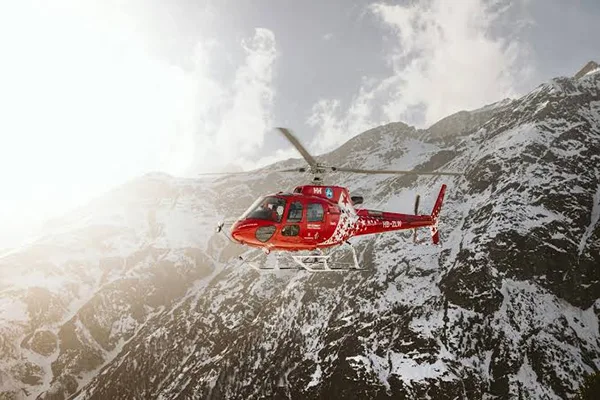
Everest Base Camp Helicopter Tour: Beyond Everest, What Stays With You From the Flight
There’s a particular kind of traveler who wants to see Everest but simply doesn’t have two or three weeks to spare walking through the Khumbu. Maybe the knees aren’t what they used to be, maybe the work calendar won’t allow it, or maybe the idea of trekking for over a week just doesn’t appeal. For these travelers, the Everest Base Camp Helicopter Tour has become one of the more popular ways to get close to the world’s highest mountain without committing to a full expedition on foot. But most articles about this flight stop at the obvious stuff — flight duration, landing spots, what you’ll see out the window. Fewer people ask the more interesting question: what actually stays with you once the helicopter touches back down in Kathmandu? Because if you talk to people who’ve done it, the answer usually isn’t just “I saw Everest.” It’s something bigger and a little harder to pin down — a sense of scale, of how vast the Himalaya really is once you’re not just staring at one peak in a photograph.
There’s something strange about seeing a mountain range unfold beneath you instead of building toward it step by step. A helicopter compresses what would normally take days of walking into roughly an hour or two in the air, and that changes the entire relationship you have with the landscape. You’re not earning the view through effort — you’re simply presented with it, all at once, which honestly takes some getting used to.
The flight typically starts over Kathmandu’s busy valley, with its terraced hills and scattered rooftops slowly giving way to greener foothills. From there, the terrain gets rougher — forested ridges, then rocky slopes, then the kind of high-altitude landscape where nothing grows anymore except lichen and stubbornness. By the time Everest and its neighboring giants come into view, you’ve already crossed through several distinct versions of Nepal’s geography in a short window of time. It’s a lot to process, and most people don’t fully register it until they’re back on the ground trying to describe it to someone.
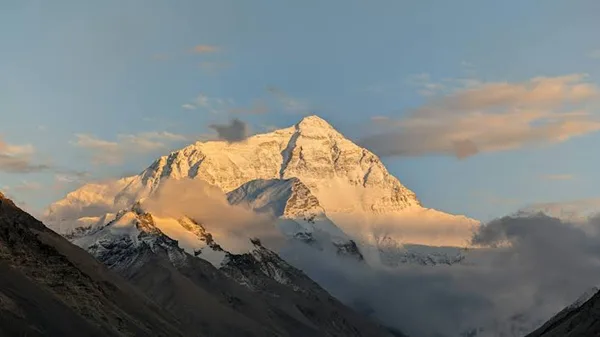
This is where the helicopter experience genuinely diverges from trekking, and not in a “better or worse” sense — just different. From above, you notice how isolated some of these mountain settlements really are, tucked into valleys that seem to exist almost by accident between enormous rock walls. You see how trails wind along ridgelines that look impossibly narrow from a distance. Glaciers stretch out in ways that photographs from ground level never quite capture, because you can’t see their full shape when you’re standing on top of one.
Someone doing the Everest Base Camp Trek builds their understanding of this landscape gradually — a ridge here, a suspension bridge there, a village that takes half a day to reach on foot. From a helicopter, you get that same geography almost instantly, which is exciting but also a bit disorienting. You end up seeing more, faster, without necessarily understanding it the way a trekker who’s spent days moving through it does. Neither approach is wrong. They’re just different ways of meeting the same mountains.
Here’s something people don’t expect going in: Everest, for all its fame, often isn’t the single thing travelers talk about afterward. It’s the mountain that gets you on the helicopter in the first place, sure, but once you’re actually up there, your attention gets pulled in a dozen directions. The Khumbu region itself tends to steal a fair share of the memory — deep valleys carved by glacial rivers, prayer flags fluttering on ridgelines too high for anyone to easily reach, small clusters of stone houses that seem impossibly placed against sheer rock faces. The sheer geological drama of the place, glaciers spilling down between peaks, ridgelines stacked one behind another into the haze — that’s often what people end up describing first, before they even mention Everest by name. What changes is the sense of scale. Most travelers arrive expecting to focus on one mountain. They leave having glimpsed an entire mountain kingdom, and that shift in perspective is arguably the real value of the flight.
It would be easy to talk about this flight purely in terms of scenery, but that misses something important. Looking down at those small settlements tends to spark a different kind of curiosity — about who actually lives up there, how they manage during winter, what daily life looks like for the Sherpa families and lodge owners who keep the trekking routes running. You start noticing trails threading between villages, tiny figures that are probably porters carrying loads far heavier than seems reasonable, yaks moving along paths that look almost vertical from the air. None of this gives you real insight into mountain life — you’re moving too fast for that — but it plants a question in your head. A helicopter flight isn’t a substitute for understanding this region on foot. If anything, it works better as an introduction, a glimpse that makes you want to know more about what’s happening at ground level.
Ask people what surprised them most, and a fair number will mention something unexpected: the quiet. Not literal quiet, since you’re sitting in a helicopter, but the visual quiet of a landscape with almost no human interruption for miles. Looking down at a valley that stretches farther than you expected, realizing how small the villages look against the surrounding peaks, seeing a mountain you’ve only known from photographs suddenly exist as an actual physical place in front of you — these are the moments people tend to hold onto.
It’s not about drama or spectacle so much as scale. Travel memories often come down to perspective more than checklist items, and that’s arguably true here more than most places.
For travelers who want a deeper, slower relationship with this landscape, the 3 Pass Trek Nepal route offers something the helicopter simply can’t — extended time on the ground, physical effort, and repeated contact with villages, trails, and shifting altitude over roughly two to three weeks. Crossing high passes on foot builds a kind of familiarity with the terrain that no aerial view can replicate. The helicopter tour, by contrast, is short, broad, and efficient — a wide-angle look at the region compressed into a few hours. Trekking is the opposite: slow, immersive, physically demanding, and deeply personal. Neither experience cancels out the other. They simply produce different kinds of memories, shaped by how much time you actually spend inside the landscape rather than looking at it.
Before booking, it helps to ask a few honest questions. Do you actually want a wide aerial perspective, or are you more drawn to the physical experience of walking through the region? Is limited time your real constraint, or is it more about physical ability? How do you feel about helicopter travel generally, and how important is time spent on the ground versus in the air? Weather is also worth taking seriously. Himalayan visibility can change quickly, and flights sometimes get delayed or rerouted because of it — so it’s smart not to treat this as a guaranteed photo session. Travelers researching operators, including companies like Adventure Great Himalaya, should look closely at what’s actually included in the flight — landing locations, duration, group size — rather than relying on marketing alone.
Everest is the headline, no question. But talk to enough people who’ve taken this flight, and the wider Khumbu landscape often becomes the part they can’t stop describing — the glaciers, the isolated villages, the sheer size of everything once you’re seeing it from above instead of imagining it from a map.
The helicopter gets you close to Everest quickly. But what tends to stay with you afterward has less to do with how near you got to the mountain, and more to do with how much larger the entire Himalaya suddenly felt once you saw it stretched out beneath you.
Yes, if your priority is seeing Everest and the surrounding Himalaya within a short window. It’s a genuinely different experience from trekking, not a substitute, since it trades days of walking for a few hours in the air.
Expect views of Everest itself alongside neighboring peaks, glaciers, high mountain valleys, and Sherpa settlements. Exact sights depend on the specific route and how clear the weather is that day.
Not really — they’re different experiences by design. The trek builds understanding gradually through days of walking, while the helicopter offers a fast, broad aerial view with very limited time on the ground.
Very different. The Three Pass route involves weeks of walking and crossing high mountain passes, creating a slow, physically demanding, and far more immersive connection with the landscape than any flight can offer.
Yes. Mountain weather in the Himalaya can shift quickly and affect visibility, routing, and timing. It’s worth checking current conditions with your operator rather than assuming clear skies are guaranteed.
Focus on the actual route, landing locations, flight duration, group size, weather policy, and cancellation terms. Compare what’s genuinely included rather than choosing based on advertising alone.
The United Kingdom is a beautiful destination that strikes the right balance between contrast and cohesion. A trip through its…

Europe is nothing less than a living fantasy and a walking dream. Blessed with the intimate cities like Paris and…

Singapore, recognized as Asia’s Greenest City, is a remarkable place to visit. It is not only beautiful but also logically…

Europe’s regal crown jewel, the United Kingdom, is quite the place for travel and history enthusiasts from all around the…

Paris is located in the north-central part of France, tucked between the UK, Spain, and Belgium. The French have always…
Japan is an island country that hangs off the coasts of China and South Korea in a seemingly ‘J’ shape.…

Welcome to Tripvert, your best travel companion. Here, you will find real travel stories, tips, and guides that will help you explore the world with a different approach.