6 Travel Expeditions That Feel Like Reaching the Edge of the World
|
Published: October 9, 2026
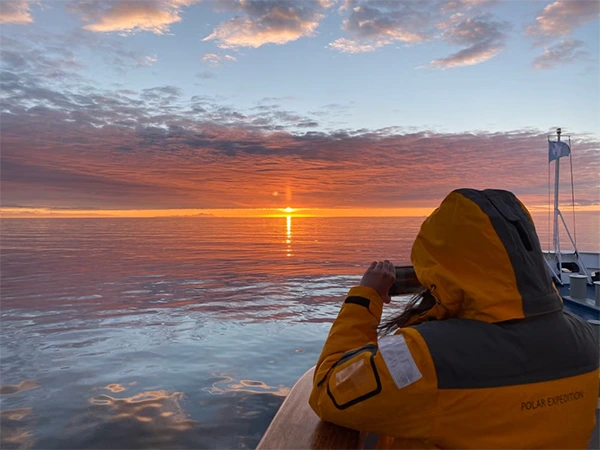
Some journeys begin where normal travel infrastructure ends.
There are no train stations at the South Pole, no highways across Greenland’s ice cap and no fixed sightseeing route through Svalbard’s sea ice. Reaching places like these depends on aircraft, expedition vessels, skis, crampons, horses or specially equipped vehicles.
The Adventure Travel Trade Association’s 2026 industry report, based on responses from 329 tour operators, found that hiking and trekking remain among the sector’s most in-demand activities. Customized itineraries have also ranked as the most popular trip type every year since 2019.
These six expeditions from 90° South to Mongolia’s Altai Mountains offer six very different ways to reach what feels like the edge of the world.
At 90° South, there is nowhere farther south to go.
Every direction from the Geographic South Pole points north, while all 360 lines of longitude converge beneath the same patch of Antarctic ice.
The U.S. National Science Foundation places the pole at an elevation of approximately 2,835 meters, or 9,301 feet, on top of the Antarctic ice sheet. The ice itself moves, carrying the nearby Amundsen-Scott South Pole Station by roughly 10 meters, or 33 feet, each year.
Reaching the pole requires a completely different operation from cruising along the Antarctic Peninsula.
EYOS Expeditions organizes journeys into the Antarctic interior using ski-equipped aircraft, remote camps and purpose-built overland vehicles, depending on the itinerary. Weather, visibility and surface conditions can alter departure times and routes with little warning.
For travelers who want more than a fly-in visit, EYOS South Pole expeditions have also operated overland journeys across the polar plateau using customized four-wheel-drive vehicles.
“The South Pole is a tremendous experience, one that has to be earned by all who venture here,” said Rob McCallum, co-founder of EYOS Expeditions.
Modern transport has changed the mechanics of polar travel, but the geography has not. Reaching 90° South still ends at a single coordinate surrounded by thousands of kilometers of ice.
Expedition specialist: EYOS Expeditions
Expedition style: Antarctic interior and overland polar exploration
Why it feels remote: It ends at the southernmost point on Earth.
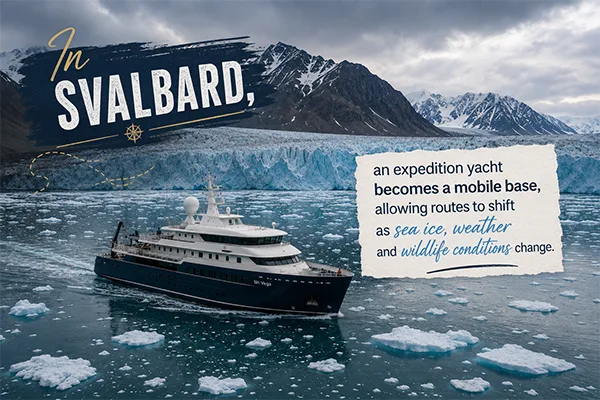
Svalbard sits deep inside the High Arctic, between mainland Norway and the North Pole.
Glaciers cover about 57% of the archipelago’s land area, according to the Norwegian Polar Institute. More than 900 kilometers of coastline are bordered by tidewater glaciers that flow directly into the sea.
There are few roads beyond the settlements, so exploration quickly becomes a marine operation.
EYOS uses expedition yachts as mobile bases in Svalbard, moving between fjords, glacier fronts, wildlife areas and landing sites that can change according to sea-ice and weather conditions.
Days may include Zodiac outings, kayaking, shore landings and guided hikes. Routes remain flexible because Arctic ice rarely follows a fixed timetable.
Summer also brings continuous daylight. Svalbard’s midnight-sun season runs from approximately April 20 to Aug. 23, giving expeditions long hours to explore when conditions are favorable.
The appeal is not a single landmark. It is the ability to travel through a landscape where glaciers, sea ice, and wildlife determine where the vessel can go next.
Expedition specialist: EYOS Expeditions
Expedition style: Private expedition-yacht exploration
Why it feels remote: Fjords and sea ice replace roads between destinations.
Patagonia’s famous trails draw hikers from around the world, but the terrain becomes far less forgiving once a route moves beyond the established paths around El Chaltén.
Los Glaciares National Park covers approximately 600,000 hectares, with glaciers occupying roughly half of the UNESCO World Heritage property.
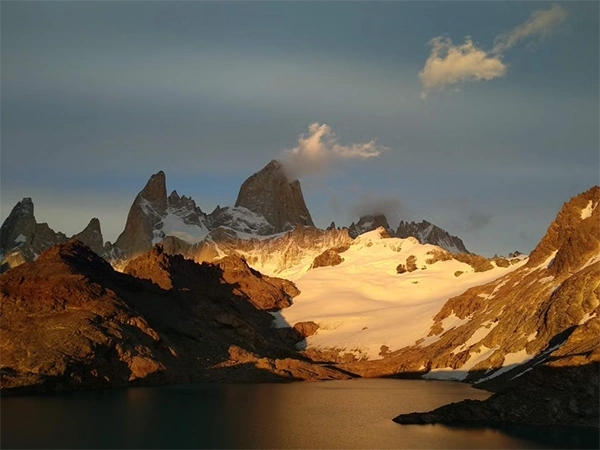
Much of that ice descends from the Southern Patagonian Ice Field.
Chaltén Mountain Guides operates multi-day routes across this terrain, including traverses between Marconi Pass and Huemul Pass and longer ice-cap expeditions that combine glacier travel with summit objectives.
Travel can involve crampons, ropes, moraine, snowfields, high passes, and exposed camps.
Weather remains one of the largest variables. Strong winds and rapidly moving systems can keep teams in camp or force changes to the planned route.
The ice field sits close enough to El Chaltén to appear accessible on a map, yet conditions can become alpine and isolated within a single day of leaving town.
For travelers approaching Patagonia through its established trail network, hiking in El Chaltén gives a useful sense of the day hikes surrounding the town. The Southern Ice Field begins where this more accessible trail system gives way to glacier travel, exposed passes and expedition camps.
Expedition specialist: Chaltén Mountain Guides
Expedition style: Glacier travel and expedition mountaineering
Why it feels remote: Marked trails give way to ice, high passes and temporary camps.
The Atacama replaces ice with extreme dryness.
The U.S. Geological Survey describes it as the driest desert on Earth, noting that some areas may receive measurable rainfall only once every five to 20 years.
The landscape includes salt flats, volcanic plateaus, geothermal fields, canyon systems, and high-altitude lagoons.
Atacama Experience, based in San Pedro de Atacama, runs a five-day Atacama Traverse and Desert Camping itinerary that moves through several of these environments rather than returning to the same hotel each night.
The route combines camping with highland landscapes, salt formations, canyon trekking, geyser fields and Andean communities.
Other itineraries operated by the company travel above 5,000 meters, where altitude becomes an expedition factor alongside sun exposure, temperature swings and limited water.
This is not the Atacama seen only from roadside viewpoints.
Several days of moving through the desert reveal its scale, silence and lack of infrastructure far more clearly than a single excursion from San Pedro.
Expedition specialist: Atacama Experience
Expedition style: Desert traverse and high-altitude exploration
Why it feels remote: Water, altitude and distance shape every day of travel.
Greenland’s ice sheet is the second-largest mass of land ice on Earth after Antarctica.
NASA data has measured Greenland at roughly 2.175 million square kilometers, with the majority of the island covered by ice.
Crossing part of that landscape is not a sightseeing excursion.
Thule Expeditions runs a west-to-east Greenland Ice Cap Crossing from Kangerlussuaq toward Isortoq. Participants travel on Nordic backcountry skis and pull expedition equipment, food, and personal gear in sledges.
The crossing takes several weeks and requires previous preparation. Thule requires participants to complete a seven-day expedition training course in Norway before joining the Greenland route.
Once the crossing begins, there are no villages, hotels, or roadside stops between camps.
Days revolve around ski distance, weather, snow conditions, navigation, and camp routines. The landscape can remain almost completely white for hours at a time.
Greenland’s scale becomes easier to understand when progress is measured in kilometers traveled under human power.
Expedition specialist: Thule Expeditions
Expedition style: Human-powered ski crossing
Why it feels remote: Travelers haul their own expedition systems across the ice.
Western Mongolia sits thousands of kilometers from the country’s most visited cultural and urban centers.
In Altai Tavan Bogd National Park, glaciers and high peaks rise above valleys used by Kazakh and Tuvan pastoral communities.
Discover Altai runs multi-day trekking and mountaineering routes through the region, including journeys to Potanin Glacier and expeditions toward 4,374-meter Mount Khüiten, Mongolia’s highest peak.
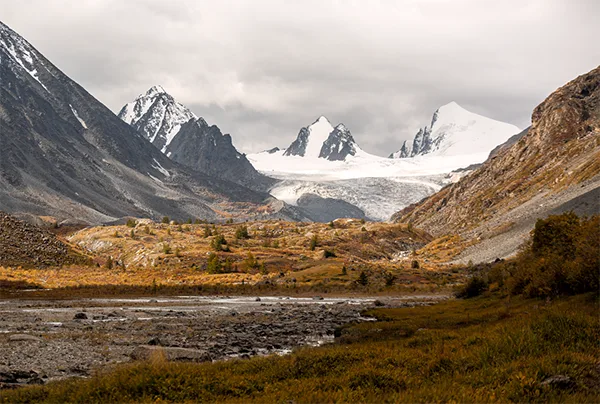
Some routes cover between 80 and 120 kilometers.
Pack horses can carry equipment through the valleys, while travelers continue on foot between temporary camps. Roads disappear quickly once routes move deeper into the park.
The landscape also contains thousands of ancient petroglyphs.
UNESCO’s Petroglyphic Complexes of the Mongolian Altai preserve engravings depicting hunting, animals, carts, horse travel, and changing ways of life across thousands of years.
Few expeditions combine remote alpine travel with such a visible record of human history.
Expedition specialist: Discover Altai
Expedition style: Supported trekking and mountaineering
Why it feels remote: Long approaches, high terrain, and limited road access separate the mountains from Mongolia’s main travel routes.
Remote travel requires more scrutiny than a conventional tour.
Travelers should check guide qualifications, emergency communications, evacuation plans, insurance requirements, physical demands, and the amount of contingency time built into the itinerary.
Operator experience is especially important when the trip involves glaciers, polar environments, high altitude, or areas without rapid medical access.
Small groups can also make a practical difference. They are easier to move through difficult terrain, place less pressure on camps, and allow guides to adjust plans when weather or surface conditions change.
At the South Pole, that may mean waiting for better visibility before an aircraft moves.
In Greenland, it may mean shortening a ski day because of snow conditions.
And, in Svalbard, it may mean abandoning one fjord and sailing toward another because sea ice has shifted.
Those decisions are not interruptions to the expedition. They are the EXPEDITION!.
Some of the most remote places to visit on Earth are the South Pole, Svalbard, Patagonia’s Southern Ice Field, the Atacama Desert, Greenland’s ice cap, and Mongolia’s Altai Mountains.
Albania’s best souvenirs aren’t objects. They’re meals, conversations and invitations to stay a little longer. Here’s how to travel the…
Most South Africa itineraries center on Kruger and Cape Town, and both deserve the attention, but neither is necessarily the…

Whitefish, Montana pulls families in for the same reasons it hooks skiers, hikers, and lake-day dreamers: Glacier National Park on…

Luxury destinations in the USA have shifted away from gilded lobbies and brand-name dining toward something quieter and harder to…

Located in the upper Florida Keys, Islamorada is widely known as the “Sportfishing capital of the world”, a title earned…

Australia is one of the most rewarding places in the world to call home. With so many desirable features in…

Welcome to Tripvert, your best travel companion. Here, you will find real travel stories, tips, and guides that will help you explore the world with a different approach.