South Pole Expeditions: How To Explore Antarctica's Interior With EYOS
|
Published: October 23, 2026
Reaching the South Pole starts with a different question from booking an Antarctic cruise: how much time do you want to spend beyond the coast? At 90° South, the destination is a point on a vast ice sheet, reached through specialist aviation and field logistics. A yacht itinerary and an interior expedition require different travel arrangements.
The appeal is the scale of the place. The National Science Foundation describes the South Pole as a polar desert with no native plant or animal life at the Pole itself. Travelers come for the geography, the history, and the experience of spending time somewhere so far removed from familiar travel infrastructure.
For anyone considering a private South Pole expedition, the most useful starting point is the shape of the journey. A flight visit, an overnight camp, and a longer interior adventure make different demands on your schedule and expectations.

One established route begins in Punta Arenas, Chile, with a flight to Union Glacier, followed by a ski-equipped aircraft journey to the Geographic South Pole. EYOS describes this sequence for its private interior expeditions, with December and January generally the preferred months and continuous summer daylight during the visit. Weather still determines what can operate.
Think of the journey as connected stages rather than a single arrival. Ask where you will sleep between flights, who controls dispatch decisions, and whether the proposed schedule allows time to enjoy the interior before heading farther south.
Antarctic Logistics & Expeditions, known as ALE, illustrates this approach in its South Pole Flights program. The published itinerary places the South Pole flight on a flexible day within a longer stay at Union Glacier. That is a useful detail to look for in any proposal: the principal excursion should have room to move.
The itinerary deserves more attention than the arrival photograph. Request a written explanation of what happens if the outbound flight is delayed, if the onward flight cannot depart, or if your return to Chile moves. Establish who arranges additional accommodation and which expenses remain your responsibility.
Accommodation needs to be understood camp by camp. At Union Glacier, ALE describes double-walled sleeping tents with beds, a communal dining area, and shared shower and toilet facilities. It also asks guests to conserve water and explains that human waste is removed from camp. These are practical details worth reading before choosing your trip.
A well-planned stay gives the camp days their own purpose. Rather than treating them as time to fill before the Pole flight, decide whether you want guided outdoor activity, photography, or a slower introduction to the surroundings.
EYOS’s account of its South Pole overnight journey places Three Glaciers in the Ellsworth Mountains before the onward flight. It describes guided outings and tented accommodation there, then a more expeditionary camp at the Pole, with heated tents and meals in a heated dining tent. Confirm the facilities and activities included in your own departure.
Privacy is a booking detail that needs a precise definition. Ask whether a private expedition means exclusive sleeping accommodation, dedicated guides, a privately chartered aircraft, or some combination of those arrangements. A tailored itinerary alone does not answer those questions.
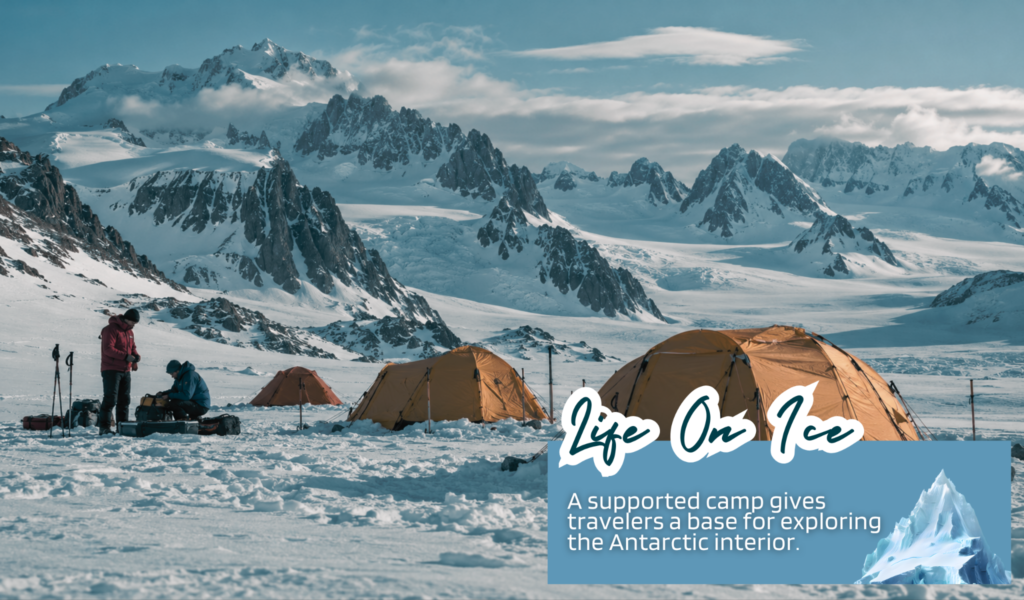
Travelers comparing exclusive South Pole expeditions should ask how much of the journey is devoted to the Pole itself and how much to the surrounding interior. EYOS lists both flight-based access and possible overnight stays; the right choice depends on whether reaching the coordinate or spending longer on the ice matters more to you.
Ask for a sample daily rhythm as well as a destination list. Knowing when you receive flight updates, how excursions are selected, and what remains available during a delay makes the proposal easier to judge.
The South Pole is a high-altitude destination. NSF places Amundsen-Scott South Pole Station at approximately 2,835 meters above sea level. The same agency identifies it as a year-round research station, so a visit to the Pole should be planned with respect for an active scientific workplace.
That elevation belongs in your pre-departure conversation with the expedition team. Ask about medical screening, the support available at each camp, and the process for deciding whether an overnight stay suits your circumstances. Share relevant health information early enough for the operator’s assessment.
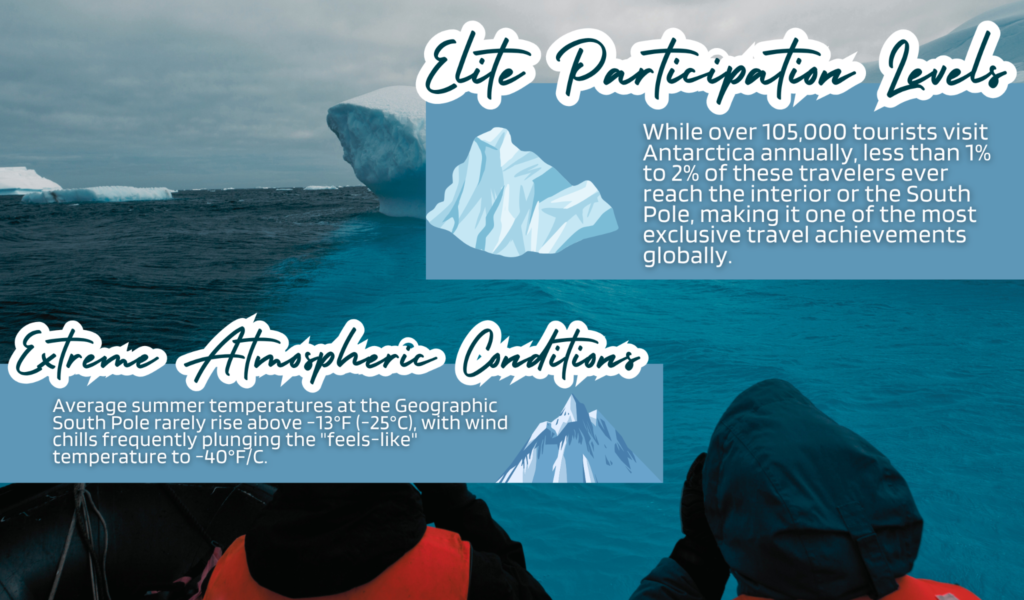
Weather also requires local judgment. British Antarctic Survey research describes katabatic winds as cold air flowing down off the plateau, with particularly strong effects in some coastal areas. Its forecasting guidance distinguishes those coastal wind regimes from conditions in the interior. A dramatic Antarctic weather statistic tells you little about the conditions on your particular flight route.
This is where operational and guest perspectives meet. EYOS’s camping account describes meteorologists watching for a suitable flight window, while ALE explicitly leaves its South Pole flight day flexible. Both point toward the same planning decision: leave space in the schedule for the expedition team to choose the flight day.
Treat the return journey with equal care. Before confirming onward commitments, ask the organizer how much flexibility to allow after leaving the ice. Obtain clear terms for delayed travel and establish how updates will reach whoever manages your arrangements at home.
The strongest proposal should explain the experience and its limits in equally clear language. Start by asking what happens on an ordinary camp day, then work through the decisions that require more detail:
Read exclusions closely. ALE’s published flight program, for example, separately identifies personal equipment, insurance, and delay-related expenses among its exclusions. Use that as a prompt to check the terms of your own quotation, rather than assuming every expedition follows the same commercial arrangements.
Preparation extends to what you bring onto the continent. IAATO directs travelers to its visitor guidance, biosecurity material, and current seasonal protocols before departure. Ask your organizer which instructions apply to the camps and activities in your itinerary, and complete the required preparation before reaching the departure gateway.
A South Pole journey earns its place in a travel plan when the time on the ice matters as much as the destination. Before paying a deposit, choose whether you want a flight visit or an overnight expedition, then request a proposal that makes the camp arrangements, weather flexibility, and full financial commitment explicit.

Planning a safari in 2026 is a great way to experience stunning scenery and world-famous wildlife in Tanzania. Although Tanzania…

Some journeys begin where normal travel infrastructure ends. There are no train stations at the South Pole, no highways across…

Albania’s best souvenirs aren’t objects. They’re meals, conversations and invitations to stay a little longer. Here’s how to travel the…

Most South Africa itineraries center on Kruger and Cape Town, and both deserve the attention, but neither is necessarily the…

Whitefish, Montana pulls families in for the same reasons it hooks skiers, hikers, and lake-day dreamers: Glacier National Park on…

Luxury destinations in the USA have shifted away from gilded lobbies and brand-name dining toward something quieter and harder to…

Welcome to Tripvert, your best travel companion. Here, you will find real travel stories, tips, and guides that will help you explore the world with a different approach.